Posts by Michele Covolan

International University Challenge 2018

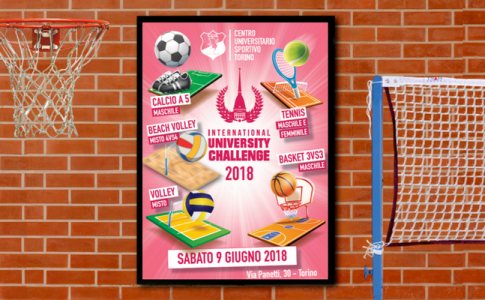
The international university challenge is back on the Turin university sport fields.

The event, dedicated to sport competition among students from Unito and Polito, will be held from Tuesday 22nd May and Saturday 9th June 2018, at the CUS Torino di Via Panetti 30.

The competitions will involve different kinds of sport, starting from women’s and men’s five-a-side football, to beach volleyball and to mixed volleyball (4 vs 4). From men’s basketball (3 vs 3) to women’s and men’s tennis. Each team may enter a tournament of its choice.

With an enrolment fee of 15 euros, students will be allowed to take part in a tournament and in the conclusive cocktail party and they will receive as well the official T-shirt of the event for free.

Please, download the enrolment form here (qui) and send it to the email address tornei@custorino.it. You can also take it in person to the CUS info points in Unito and Polito or to the reception desks Braccini and Panetti.

The College Fair  UniTo goes on! The 2018 edition of the College Fair Days has been concluded, but there is a further series of events available for those who still have got confused ideas.

In the context of the University Open Days, a number of initiatives have been organised, such as meetings with lecturers and students, lectures and guided tours of the University. The programme is mainly intended for students in their 4th or 5th year at high school  but also for all those who need a guidance in order to continue their studies.

In addition to the University Open Days, each School and Department organises other activities during the academic year. The List of College Fair Activities contains all the planned initiatives as well as the contact persons to address in order to get further information about each single department.

If you still have got doubts and do not know which degree course to undertake, download the list in PDF format, check the programme and find the college fair meeting which is just right for you! Catalogo attività di orientamento 2017-2018.

Cinquanta sfumature di tasse

Wednesday 23rd May, at 4 p.m. in the Aula Magna of the Campus Luigi Einaudi  will take place the second meeting of a training and debates programme entirely organised by the Student Council (Consiglio degli Studenti) in order to examine in depth the major issues regarding University and the current situation of those experiencing it  every day.
Are you a student? Maybe you are even student rep but often you have no idea how to interpret the vast majority of the decisions regarding your degree course or made by your department and you could hardly understand the causes of some difficult situations?
This is precisely why the Student Council, which includes student reps from all the department of UniTo, has organised this series of meetings  in order to examine, understand and discuss together the major issues, often linked to major problems, regarding the academic world. The second of those meetings will take place on May, 23rd and will consist of  two separate parts.

FIRST PART: WORKSHOP IN TEAMS

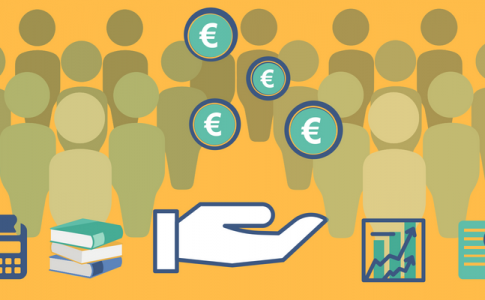
Students are split into teams, each one representing a policy different than the others. Starting from some input data regarding financial resources number of students and primary and secondary objectives, they will have to set up effective taxation policies and student contributions. For example, the team the policy of which is the establishment of a University where you can study for free, will have to start analysing available funds and  number of students, as well as role of government and of local authorities, in order to achieve this goal within the shortest time.

The purpose of that is indeed to introduce students by and large to the various approaches to the taxation issue, by remaining, in this first part, in the domain of the abstract models “of principle”.

SECOND PART: DEBATE ABOUT POLICIES THAT UNIVERSITY SHOULD UNDERTAKE

In the second part of the meeting, the various strategies which have been devised will be presented and, after a short debate, those holding the meeting will give a specific overview of the actual and current situation of the taxation issue in Italy and at UniTo in particular.
This presentation will trigger the debate about which of those abstract models can be applied more effectively at UniTo, in order to achieve specific objectives, also by discussing together the priorities regarding the taxation issue.
Since places are limited, please send an e-mail to confirm your participation to the address of the president of the president of the Student Council (presidente.consigliostudenti@unito.it) specifying  your NAME and SURNAME and the DEGREE COURSE YOU ARE ENROLLED ON.
Finally, please consult the Facebook event  (l’evento Facebook) in order to keep up with materials and graphic info we will make available while preparing the event.

CSI, NCIS: verità e finzioni sulla scena del crimine

Is the science which solves cases? Is it as simple as fictions make us believe? CSI, NCIS… science at the crime scene between truth and fiction will answer to these and other questions today, 7th May at the Auditorium “Cavallerizza Reale” of the University of Turin from 5p.m.

The event, organised by the Associazione Amici dell’Università di Torino has already aroused a lot of interest, there will be more than 400 participants. For booking you can call the number 011 660 42 84  or sending an email to info@amiciunito.it.

This exceptional interest is mainly due to the success of TV series but how real their settings?

Luciano Garofano, former Commander of the RIS Carabinieri of Parma and president of the Italian Forensic Science Academy answers to this questions:

“Fictions have timeframes that lead to accelerating and simplifying the work of the RIS; we must respect norms , which requires formalities in respect of the right of the individual: in real life we need to verifying, to summon all the parties and real times are extended in order to respect the laws. In addition, we must take into consideration serious and impeding problems: on one hand science is now offering to us incredible possibilities, so that a minimal hint is enough to have immediately available results, on the other hand however we are still lagging behind as regards procedures at the crime scene. So, for some aspects, we made lots of progress in the lab activity but the attention devoted to the crime scene as not improved at the same time. The techniques have improved the sensibility but also increased the risk of “innocent contamination” ; we need to make something in terms of training and improving procedures”

What’s the medical examiner’s point of view?

Roberto Testi, local health medical examiner of the City of Turin finds TV-series with his “colleagues” as protagonist interesting and often amusing.

“Actually, the reality is very less romanticized but sometimes more interesting than fictions. The reality has intuitions and offers some sparks that screenwriters cannot even imagine”

Scientific investigation will substitute the traditional one?

“Absolutely not” says Garofano “because scientific investigation must always be conceived in an optic of integration with traditional investigation. This latter offers the sparks without which the scientific investigation could not exist and vice versa”.

During the meeting, it will also be talked about the psychological approach to the criminal. Georgia Zara, Associated Professor of the Psychology Department of the University of Turin, deals with “sex offenders” and men who mistreat or kill women.

my field of action is the phase which follows the sentence of the author of the crime, evaluation of the risk, social danger, how to deal with individuals with a sexual crime background..

With the Forensic medicine I’m working on a study on 264 women killed in the area of Turin from 1970 to this day; we are trying to understand what are the dynamics, the risk factors, the kind of relation with the murderer, what brought to the murder.

The psychologist plays a fundamental role, especially in understanding the risk of a criminal relapse. Why does an individual who has started a criminal career carry on with it? Often, the criminal careers of some individuals absorbs their whole life. Understanding the risk process at the core of this mechanism means be able to act at preventive level and intervene at a behavioural level on the factors that generate criminality”

And we come back to TV and to the question, if so many criminal programms coul have a negative impact on the spectators.

How has the profession of the scientific investigator transformed itself during the years?

Sergio Festa, retired Chief Warrant Officer , already operating in the RIS Carabinieri of Turin answers the question:

Here in Turin, from a three-drawers wardrobe containing cameras and magnifying glass , we created a laboratory. For us, the first turning point happened in 1990, with the investigations on Donato Bilancia (serial killer operating between Piedmont and Liguria) and the case of Erika and Omar (the Novi Ligure murder). A turning point in particular as to regards the faith given to the forensics that allowed to solve these cases”

The second part of the meeting will be devoted to the training. How can you become a scientific investigator, which kind of studies and specialisations are requested? All what you need to know in order to become a real “Gil Grissom” will be explained by Professors of the University of Turin among whom Giancarlo Divella (Forensic Medicine) and Cristina Giacoma (Sciences of Life and Biology of the Systems).


Speakers

Luciano Garofano, former Commander of the RIS Carabinieri of Parma and President of the Italian Forensic Science Academy

Sergio Festa, retired Chief Warrant Officer , already operating in the RIS Carabinieri of Turin

Roberto Testi, local health medical examiner of the City of Turin

Alessio Ferrara Forensic Biologist

Paolo Garofano Laboratory Director Forensic Biology

Alberto Mittone Criminal attorney at the Court of Turin

Onelio Dodero member of the group Organised Crime and Urban Security of the Public Prosecutor’s Office of Turin

Georgia Zara, Associated Professor of the Psychology Department of the University of Turin

Giancarlo Divella Ordinary Professor in Forensic Medicine and Director of the Graduate School in Forensic Medicine of the University of Turin

Giuliano Carlo Geminiani, Director of Criminal and Forensic Psychology at the University of Turin

Cristina Giacoma, Director Sciences of Life and Biology of the Systems

Marco Vincenti, Director of the Chemistry Department of the University of Turin

 

BREAK/CUPS: I bicchierini da caffè Bibo reinventati dagli studenti del Politecnico

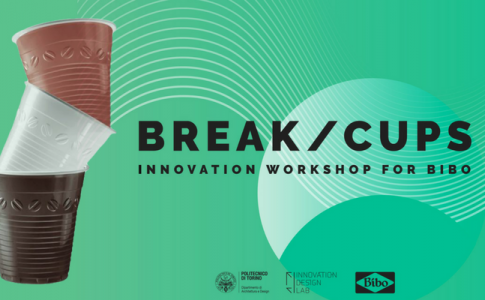
Break/Cups has been an Open Innovation project organised by the Innovation Design Lab (IDLab) for Bibo, the leading company in the production of disposable plastic for the food market.


The workshop involved 28 2nd and 3rd year-students of the bachelor’s degree in Design and Visual Communication and students of the master degree in Systemic Design of the Polytech of Turin (Politecnico di Torino) with the aim to develop a new and modern concept of the disposable coffee cups, trying to innovate the product, its communication and the services for its distribution and employ.


Starting from the needs , the problems and the productive limits, the lab guided the team from the definition of an analysis of the canvas and the pertinent guidelines up to the design of the final concepts.


The project teams developed 7 concepts on the theme of the research. These letter brought to the prototypal development of 3 disposable cups for vending machines, which currently are in an engineering phase for the beginning of the production, where team members succeeded in adding value and innovating different aspects which ranges from gestures, to spreading contents up to giving value to the consumed drink.


The results of the workshop can be seen in an exposition, opened from 10th to 12th May, at the Sala delle Colonne of the Castle of Valentino


PRESENTATION

10th May 2018, 11.00 a.m.

Sala della Caccia, Castle of Valentino, , Viale Mattioli 39, Torino

Speakers:

Paolo Tamborrini,   Coordinator of the Design Curriculum
Paola Villa, Head of Marketing for Bibo Italia S.p.A.
Roberto Dal Zotto, Sales Manager Vendng e Dairy
Paolo Di Santo,CEO Bibo Italia S.p.A.

Students of the Design Curriculum will be present.

Bambini e bambine studenti al Politecnico per un giorno

The initiative “Girls and Boys, a day as university students” is back

Also this year, the initiative “Girls and Boys, a day as university students” sponsored by the Municipality of Turin and the Universities of Turin will take place at the Polytech (Politecnico). Children will be involved in some activities inside the University in order to discover the world of the scientific and technological research. The project is sponsored by the Department of Education of the Municipality of Turin through the Turinese Institution for a Responsible Education (ITER).

From 7th to 9th May, some fourth-and fifth-grades classes of the primary school of Turin will be welcomed at the Polytech with a series of activities the purpose of which is to show to the children the research of the Polytech. Today, 8th May, at 9 a.m. children will be welcomed by the Dean Guido Saracco.

Then, they will get into the earth of the activity:

Vision and color

The laboratory proposes the culture of the vision as training stage of the children and of their personality; the activity allows children to experience vision and colour, measure and proportion with simple supports created ad hoc


Origami and shapes
The activity guides the children through the identification of simple shapes hidden in manufactured ones through a process of recognition and abstraction of significant elements. Their paper modelling allows to understand the theoretical geometrical fundamentals and to learn them in a simple and practical way


Rover DIANA

Children will have the chance to see a rover model in motion. In the coming years, the model will be brought to the Moon by the ITALIA team, a consortium of Italian companies and universities participating in the international competition Google Lunar X-Prize. The purpose of the vehicle is to cover at least 500m and to send to the Earth high-resolution images of an Apollo moon-landing site or of the ones of previous moon missions.


The suspended ball

Children will have the chance to make a bizarre experiment. Everyone knows that taking a little ball made with an iron sheet and letting it go, it will fall to the ground.

We also know that if we take a magnet, there is a magnetic force that attracts the balls and so the little ball will remain attached to the magnet.

But what if the magnetic force of the magnet is the same as the force that makes the ball fall?

It may seem a spell, but in this case the ball remains suspended in the space. Making an object levitate means maintain it lifted up in a stable position without touching it, like some illusionists do in their spectacles.


Inverse pendulum

If you put a pen upright on the palm of your hand, will you be able to make it stand just like a juggler would do? It isn’t that easy, but we could succeed in doing it for some seconds.


Lego Mindstorm

Here’s something you are more familiar with: the Lego bricks. But what do the Lego do at the Polytech?

In the Lego Mindstorm series there are not only bricks for building objects but also a little computer which can be programmed for making little engine move or for reading some sensors (which are contained in the bricks).

For example, we can build a toy-car that in front of a barrier can move back and steer, trying to bypass it.

In short, we only need a bit of fantasy and we can really invent lots of funny projects. During the activity, children will see in motion little Lego robots previously built.


Chemistry turns into electricity

The idea is to show how the science can be applied and obtain technological solution that we use daily. Also an apparently tough and difficult subject as the chemistry can become funny and magical.

So, some activities that can be realises directly by children are proposed:

  • realising a simple battery with everyday things ( copper and zinc in a lemon and measuring some electrical parameter or lighting a led)
  • split the water in hydrogen and oxygen using a solution of water and bicarbonate, two drawing pencils … and a battery

finally there will be an only demonstrative activity: variation of the volume of gas contained in balloons due to the lowering of the temperature with the employ of liquid nitrogen, or production of carbon dioxide due to the decomposition of calcium carbonate with an acid.


Team H2politO

It will be explained the functioning of an hybrid vehicle, with an electrical a thermal engine, which allows to consume less fuel. The vehicle has been projected for participating in student competitions of low consumes, where all the vehicles are devised and realised by student s who want to conceive the mobility in the city in a “greener” way.


Team racing

The Team Racing (Squadra Corse) is a student team of the Polytech of Turin which was created in the winter 2010 from the idea of 10 students who loved engineering and motorsport.

The aim is to project a competition single-seat car every year in order to take part in the Formula SAE Championship for students from the best Universities worldwide. The Championship was created in 1981 from the idea of the Society of Automotive Engineers.


POLICUMBENT

Are you curious about knowing which is the fastest bike of the world and why isn’t it used at the Giro d’Italia? Do you want to discover what a velomobile is?

The student team Policumbent studies, design and realises human-powered vehicles in order to face the sporty and the everyday mobility challenges. A research which is something in between science, engineering and sport for exploring the limits of human skills. Some of the realised prototypes and new projects will be exposed and presented and, with a bit of luck, there will be the chance to do a little pedalling.


HISTORY GROUP

It will be presented the scale model of the roof of the Castle of Valentino and there will be a little introduction of the story of the architecture of the Royal House of Savoy

ITS-ICT: calendario degli Open Day

The Fondazione Istituto Tecnico Superiore per le Tecnologie dell’informazione e della Comunicazione (ITS-ICT) opens its doors with a series of open days during which will be presented all the trainings offered for the years 2017-2018:


  • Interaction & visual Design 

Higher technical diploma in methods and technologies for designing software systems


  • Web & Mobile app development
    Higher technical diploma in methods and technologies for developing web and mobile systems


  • Integrated Backend Services
    Higher technical diploma in methods and technologies for the developing of software systems


The presentations will take place in Via Jacopo Durandi, 10 – Turin from 3 p.m. to 5 p.m. according to the following dates:


  • Wednesday 16/05
  • Wednesday 13/06
  • Wednesday 27/06
  • Wednesday 4/07
  • Wednesday 18/07


At the end of each meeting, there will be some time for asking questions.

At the end of the presentation, the rooms and the spaces of the ITS will be presented and current students will tell about their experience in the ITC.

For further information:

Tel: : 011 0371500

Email: info@its-ictpiemonte.it

For further information about technical collages in Piedmont, go to the site  www.itspiemonte.it

Primo master italiano in Sport Engineering

The II level Master in Sport Engineering will be devoted to creating a new generation of technicians and managers for the European sport industry, in cooperation with the Sport School of the CONI, the Città Studi Biella and the il Johan Cruyff Institute.


PRESENTATION OF THE MASTER

4th may 2018, 12 a.m.

Sala Consiglio di Facoltà, Turin Polytech – C.so Duca degli Abruzzi 24, Turin

In order to achieve extraordinary performances, an athlete cannot rely only on their performances but needs the contribution of an entire team and of the most innovative technologies: this is the spirit of the new Ii level Master in Sport Engineering of the Turin Polytech, in cooperation with the Sport School of the CONI and Città Studi Biella, certified by the Johan Cryuff Institute and structured to train the members of a team that is more and more often made also by technology experts.

The Master will be an occasion for confrontation between professionals with multidisciplinary skills: a post-graduation program which has been created from the understanding of the skills, both in the training and in the research, offered by the Turin Polytech in different fields which are linked or useful to sport and which are part of Sport Engineering. This is a discipline composed by different aspects and which requires skills in different fields: from materials science to meteorology, from ICT to biomechanics, from sensors’ development to statistics, from nutrition to sport medicine.

It will start in September 2018 with a deadline for enrolments the 15th June. The Master will be held at Biella in the Modern Città Studi campus, designed by the famous architect Gae Aulenti: the ideal environmental and social context for sport practise with easy access to ski slopes, lakes and trekking or mountain bike paths. A natural theatre in the Pre-Alps of Biella, important for its top-quality textile industry.

The Master will train a new generation of technicians and manager for the European sport industry through a wide training offer in English: 10 courses for a total of 400 hours, based on a modern didactic with a learning-by-doing approach, which will include  activities in the field an in lab; a week in the Olympic preparation centre “Giulio Onesti” of Acqua Acetosa with CONI’s technicians, 550 hours of stage for put into practise the acquired skills, an online-course lasting 60 hours about  “Sport Management Fundamentals”, certified by the Johan Cryuff Institute and 4 top seminar with exceptional testimonials.

At the end of this training, the sport engineer will have developed competences for what regards the equipment, the choice and the development of innovative technical materials, from clothing to sport instrument, in order to enhance the performance of the athletes improving also the safety aspect. Moreover, they will be able to project systems for analysing and managing data in order to help managers, trainers and athletes with better training systems.


The master will be presented the 4th May 2018 at 12 a.m. at the Turin Polytech (Sala Consiglio di Facoltà). The theme “Sport Engineering between didactics and innovation” will be discussed by:

The Sport Delegate of the Turun Polytech Dean Marco Barla

The Director of the Master School Carlo Rafele

The Sport Councillor of the Municipality of Turin Roberto Finardi

The Director of Sport School CONI Rossana Ciuffetti

The President of Città Studi Biella Pier Ettore Pellerey

L’e-learning Director Johann Cruyff Institute, Victor Jordan

The Vice-Director of the Sport Engineering Master Ada Ferri


Sport Engineering between performance analysis and materials development 

Marco Galiazo, Olympic champion of Archery (the athlete’s point of view)

Rossano Galtarossa, Olympic champion of Canoeing (the athlete’s point of view)

Marco Iazzetta, performance analyser- Italian Sailing national-Italian Sailing Federation (the technician point of view)

Alessandro Poggio, international arbiter of Foil and Fencing Trainer of the Italian Fencing Federation (the arbiter-judge pov)

Matteo Moncalero, person in charge for Research and Development of Equipment (the materials’s technician pov)


The event will be moderated by Alessandro Pezzoli, coordinator of the Sport Engineering Master and Meterologist and Environmental Analyser of the Sweden Olympic Comitee-Olympic Swedish Sailing National

Digital Education, quando lo Storytelling è parte della cura

The convention: Digital Education: a new paradigm for the future challenges that took place in April in the Auditorium Cavallerizza Reale of the University of Turin emphasised the potential of Storytelling. In the age of Big Data, the narration has been rediscovered as important means for organising the chaos, the big numbers and the large amount of information that we find on the Web… but not only. In fact, the narration becomes fundamental also in the fields of public health and education.

The Storytelling, a British term that means both narrative and narration understood as act of telling a story, emerges in today’s world with a new vitality, even if it has very long-standing roots: since ancient times, narration has been the instrument through which humankind structured reality. It has always been the most practical, socially adaptable, immediate and direct form to structure human experience. The novel and the short story offer what is not visible for essays and academic writings, they expand the kingdom of what can be told, they dive in particulars but at the same time they underline the universality of some human condition.

Lo Storytelling si fa Digital

The Digital Storytelling, the digitalised form of the short story that combines the potentialities of the digital medium with the value of  narrative, applies today to many disciplines: creative writing, sociology, psychology and medicine. One of the assets of the DS, in fact, is the ability to involve both at cognitive and emotional level. On the occasion of the convention Digital Education: a new paradigm for the future challenges and of the workshop leaded by Barbara Bruschi and Vincenzo Alatra, these particular abilities of Digital Storytelling have been discussed. The digital narration becomes a new instrument for those who operate in the field of Public Health and Education.

Barbara Bruschi , professor for Education and Learning technologies at the University of Turin underlined that narration, integrated with the use of voice, pictures and an audio support, are particularly important in the treatment of a patient. In fact, Digital Storytelling allows to highlight one’s fears, by showing them to the other and to oneself.

Benefits deriving from Digital Storytelling are not limited to patients but involve also health workers and educators. As Bruschi explains: “With 15 educators from the education services of the City of Turin we gave a new sense of the educational profession. People that had completely forgotten 40 years of professional life could find again the dimension of professional resistance also thanks to the pictures”.

Laureati: occupati sì, ma a quale prezzo?

Okay, graduates work, but at what price? AlmaLaurea, the interacademic group which carries out statistics and tries to make offer meet demand through the publication of the CVs of just graduate students and of the job place offered by companies, found out that graduates are employed, but they remain poor.

The last survey, which has involved 71 Universities and 620 thousand graduates from 2011 onwards, produced the following data: three years after graduation, the employment rate is 82% for those with a five-year degree and 83% for those with a two-year one. However, data regarding the remuneration graduates earn a year after having been employed are not so positive: 1.110 euro net monthly. Five years after graduation, wages increase but remain inferior to 1.400 euro net monthly.

But what is the situation in Piedmont like? The picture that emerges from the data published by the newspaper L’Espresso about the situation of young people a year after graduation does not look very good. The situation of the six sectors in which appear data about Universities of Piedmont is the following:


Legal Sciences 

For three-year and master degrees (not single-cycled ones) in legal sciences and services, the percentage of employed graduates is 26,3% of the total, with an average wage of 965 euro monthly.

Pharmaceutical Sciences and Technologies

In Turin, 86% of graduates in this discipline are employed a year after degree and earn an average wage of 1239 euro.

The University of Eastern Piedmont has the same percentage of employed graduates but with a slightly inferior wage of 1090 euro monthly.

Biology and Geology

The University in Vercelli records 50% of employed students a year after degree with an average wage of 976 euro.


Physics, Informatics and Mathematics

58.1% of graduates in scientific disciplines at the University of Turin is employed a year after degree, with an average remuneration of 1100 euro monthly.

Agricultural, Food, Zootechnical and Veterinary Sciences

As regard the University of Collegno, for three-year and master degree, the average employment rate a year after degree is 73,5% with an average retribution of 1128 euro. Worrying data emerges for single-cycled five-year degrees in Veterinary and Agricultural Sciences: the employment rate is 69.2% with a wage of only 774 euro monthly.


Prev1404142434482Next